




Где смотреть (Россия)
Проверено 11.10.2026
Доступно ещё в 82 странах 81 со стримингом
- au Австралия Стриминг
- at Австрия Стриминг
- dz Алжир Стриминг
- ar Аргентина Стриминг
- bs Багамы Стриминг
- bh Бахрейн Стриминг
- be Бельгия Стриминг
- bm Бермудские о-ва Стриминг
- bg Болгария Стриминг
- bo Боливия Стриминг
- br Бразилия Стриминг
- gb Великобритания Стриминг
- hu Венгрия Стриминг
- ve Венесуэла Стриминг
- gt Гватемала Стриминг
- de Германия Стриминг
- gi Гибралтар Стриминг
- hn Гондурас Стриминг
- hk Гонконг Стриминг
- gr Греция Стриминг
- dk Дания Стриминг
- do Доминиканская Республика Стриминг
- eg Египет Стриминг
- in Индия Стриминг
- id Индонезия Стриминг
- jo Иордания Стриминг
- iq Ирак Стриминг
- ie Ирландия Стриминг
- is Исландия Стриминг
- es Испания Стриминг
- ye Йемен Стриминг
- ca Канада Стриминг
- qa Катар Стриминг
- co Колумбия Стриминг
- cr Коста-Рика Стриминг
- ci Кот-д’Ивуар Стриминг
- kw Кувейт Стриминг
- lv Латвия Стриминг
- lb Ливан Стриминг
- ly Ливия Стриминг
- lt Литва Стриминг
- my Малайзия Стриминг
- ma Марокко Стриминг
- mx Мексика Стриминг
- md Молдова Стриминг
- ng Нигерия Стриминг
- nl Нидерланды Стриминг
- ni Никарагуа Стриминг
- nz Новая Зеландия Стриминг
- no Норвегия Стриминг
- om Оман Стриминг
- ps Палестина Стриминг
- pa Панама Стриминг
- py Парагвай Стриминг
- pe Перу Стриминг
- pl Польша Стриминг
- pt Португалия Стриминг
- kr Республика Корея Стриминг
- ro Румыния Стриминг
- sv Сальвадор Стриминг
- sm Сан-Марино Стриминг
- sa Саудовская Аравия Стриминг
- sg Сингапур Стриминг
- sk Словакия Стриминг
- us Соединенные Штаты Стриминг
- th Таиланд Стриминг
- tz Танзания Стриминг
- tn Тунис Стриминг
- tr Турция Стриминг
- uy Уругвай Стриминг
- ph Филиппины Стриминг
- fi Финляндия Стриминг
- gf Французская Гвиана Стриминг
- hr Хорватия Стриминг
- cz Чехия Стриминг
- cl Чили Стриминг
- se Швеция Стриминг
- ec Эквадор Стриминг
- za Южно-Африканская Республика Стриминг
- jm Ямайка Стриминг
- jp Япония Стриминг
- ch Швейцария Аренда или покупка
Мы можем получать комиссию за ссылки на сервисы. Цены и каталоги часто меняются, поэтому проверяйте сервис перед оплатой. Данные JustWatch через TMDB.
Is this offer wrong?
Tell us what does not match and we will re-check this title first.
Availability history in Россия
Last checked
 On 1 service when we started tracking Curiosity Stream
We re-check popular and new titles several times a day and log every change. See what is new in Россия
Описание
Кем бы мы были без слизи? Можем ли мы питаться водой? Сколько весит живое существо? Найти ответы на эти вопросы - цель нового научного шоу ARTE. Ссылаясь на "Путеводитель автостопщика по галактике" Дугласа Адамса, где цифра 42 является окончательным ответом на все вопросы, 42 пытается дать ответы на них.
Сезоны и серии
1 сезонСерий: 219
Сезон 1
-
С1 Can we dig our way through the Earth?
This report explores the challenges and insights gained from deep drilling into the Earth. Researchers from Germany, France, and Italy emphasize the technical complexity and costs of these undertakings. The drill cores, made of rock or ice, serve as archives of Earth's history and enable the study of phenomena such as climate change.
-
С2 Could We Live on the Moon?
A new lunar cycle begins with 95 planned missions over the next ten years, including contributions from smaller nations. Scientists want to know how humans can carve out a life on the moon. Could humans live there permanently? And who does the moon belong to? Salem Al Marri of the United Arab Emirates Space Agency explains the motivations and goals of this intensified lunar exploration.
-
С3 Should we use lotteries instead of elections?
The ancient Greeks practiced sortition as a cost-effective method to prevent corruption and abuse of power and to establish political equality. Although this idea resurfaced in the 19th century, modern societies have opted for elections as the means of selecting representatives.
-
С4 How Much Does Life Weigh?
A research team led by Israeli biologist Ron Milo has attempted to calculate the total mass of all living things on Earth by combining data from various fields of research. The challenges range from accurately estimating the fish population in the ocean to discovering previously unknown species on land.
-
С5 Will we move onto the water?
Climate change could cause sea levels to rise by up to 20 millimeters per year by the end of the century, threatening island nations and major cities. Urban planner Heiner Haaß and architect Bjarke Ingels propose building on the water, with concepts like Oceanix City or floating structures in the Maldives.
-
С6 Can Algorithms Make Us Healthy?
Bodily data, from genes to the microbiome, could indicate diseases early if analyzed precisely. Computers and algorithms are needed to recognize patterns. In the US, skin cancer has been detected early using algorithms. The vision is a medical avatar that monitors our bodily data and warns us of health problems.
-
С7 What if there were no mucus?
Mucus, a versatile substance in nature, fulfills various functions: It can glide, stick, select, and even serve as a protective or defensive weapon. The unique state of matter of mucus enables its diverse applications. Microbiologist Hans-Curt Flemming emphasizes the central role of mucus in the evolution of microorganisms.
-
С8 How do we solve the nuclear waste puzzle?
Long considered clean and inexpensive, nuclear energy raises a major problem: ultimate radioactive waste. This waste must be buried underground for at least a million years—an eternity! How can we warn our descendants of the risk it represents? What pictograms could alert them to the toxic gift we are leaving them?
-
С9 What if Fear Didn't Exist?
Life would be fantastic if we were never scared. We could cross deep ravines on tightropes, ski down the steepest mountainsides and feel fine. Unfortunately, fear runs deep inside us.
-
С10 What if the ice disappeared?
With global warming, the melting of the ice is accelerating. The Arctic is warming two to three times faster than the rest of the world. Having remained stable until recently, the Antarctic sea ice is now melting dramatically. What will be the consequences of this phenomenon for the environment and for human beings?
-
С11 Do We All hear the Same Thing?
From birth we are surrounded by sounds which, often without our knowledge, influence our view of the world. But are our reactions to these sounds the same?
-
С12 Are we too pessimistic?
Although we are mostly optimistic about our own lives, we tend to be rather pessimistic when we consider the future of the world and the future of our society. How can we explain this apparent contradiction?
-
С13 Does the Perfect Song Exist?
What's the recipe for making a song a global hit? Musicologists, brain scientists and professionals in the music industry are actively researching the 'magic formula' for the mega hit.
-
С14 Are we alone in space?
The universe is vast. So vast that it defies the imagination. To the point that we find it strange that we "Earthlings" are the only living beings to inhabit it. What, then, is the probability that extraterrestrials exist? What might they look like? Finally, wouldn't their existence force us to rethink our place in the cosmos?
-
С15 Why Do We Eat What We Eat?
Tea of coffee? Fish or meat? Every day human beings make around 200 decisions about what to eat. But what drivess these choices? Why do we eat what we eat?
-
С16 What is the secret of light?
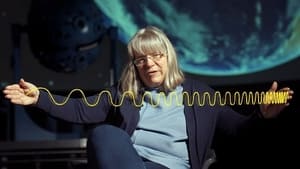
Light, as both a wave and a particle, travels at a constant speed. A beam of light originating in the sun's interior reaches Earth after eight minutes and drives the life cycle through photosynthesis.
-
С17 Can we save the trees?
Drought and insects threaten forests. What can be done to save them? In northern France, researchers are trying to introduce plants native to the south. Across the Rhine, the Thünen Institute cultivates oak trees that are particularly resistant to insects, drought, and fungi.
-
С18 What if dust didn't exist?
Nobody likes dust. Attempts to get rid of it are futile; it always comes back. And that's a good thing! Because without dust and its superpowers, life on Earth would hardly be possible. Dust contributes to the formation of rain, it provides nutrients to the sea and the jungle, and it's our personal calling card. Come to think of it, dust might even be able to save the world.
-
С19 Geoengineering: Earth's Last Resort
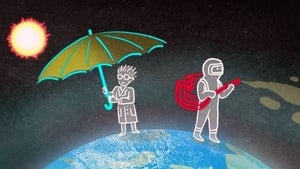
To tackle climate change, one option is to artificially cool the Earth or capture CO2. The field of geoengineering is full of seemingly outlandish ways of manipulating the planet's climate.
-
С20 Could Algae Save the Planet?
The fact that we have a breathable atmosphere on Earth is largely down to algae. Could these aquatic plants be the secret of solving climate change and saving ourselves and the planet?
-
С21 Will Messenger RNA Save Us From Cancer?
The sharpest weapon of the pandemic has given us a vaccination technique that almost no one knew about before the coronavirus—messenger RNA. It has been studied for over 20 years. The grand goal of mRNA pioneers: a cancer vaccine. After the success of coronavirus vaccines, will we also defeat this old sworn enemy of humanity? A small community of researchers from around the world has always believed in the revolutionary potential of mRNA vaccination. The rest of the scientific world considered the biomolecule a mere unstable diva until recently. "No one read our papers, and we didn't receive any research funding either," says Steve Pascolo, who likes to compare mRNA to the transcription of a recipe from the great cookbook of DNA. A transcription that can be delivered to the kitchens of cells, which then do everything indicated in the recipe. The human body becomes a pharmacy.
-
С22 Will We Stop Flying?
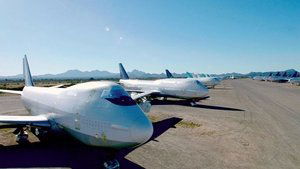
Giving up flying overnight would cause global logistical problems, as many delivery chains would be interrupted. But planes are climate killers. So what should be done?
-
С23 Will We Like Robots?
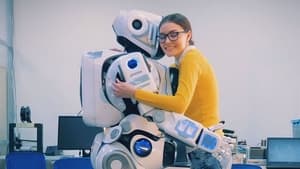
It is estimated that there are now more than 1.7 million robots with social capabilities in the world. They feed us, educate us, help us, and entertain us. Highly technical sex robots have existed for a long time. But can these machines actually develop feelings—or even experience love? "We have developed digital artificial hormones for our robot. And we are using artificial intelligence to simulate the changes in hormonal balance in a person who falls in love," explains Hooman Samani, a robotics developer at the University of Plymouth. Conversely, we are also moving closer to a human-machine relationship: For cognitive psychologist Martin Fischer of the University of Potsdam, certain psychological effects indicate that our attitude toward robots will become increasingly positive in the future.
-
С24 The Purpose of Parasites
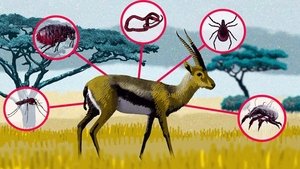
Parasites get a bad rap: they can make us sick or even kill us. For centuries, we have been trying to protect ourselves against them, in particular through hygiene measures. Yet half of the living beings on Earth are parasites. If they are really everywhere, maybe they are not fundamentally useless?
-
С25 Could We Sleep Less?
We spend a third of our lives sleeping. Is it possible for us to sleep less and enjoy extra waking years for leisure and work? Can we optimise our sleep patterns to get more out of life?
-
С26 Are Cryptocurrencies the Future?
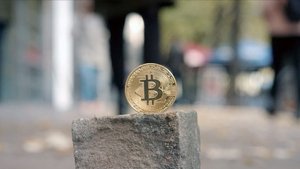
In September 2021, El Salvador became the first country in the world to introduce Bitcoin as legal tender. From now on, all companies accept the cryptocurrency from their customers, as well as the US dollar. "A crazy idea," says former economist Peter Bofinger. The price of bitcoin is far too volatile, and it's a dangerous bet - one that the president thinks he can pull off.
-
С27 Do We Live in a Black Hole?
Black holes can tell us a lot about the universe. But could they hold the key to understanding our world? Astrophysicist Nikodem Poplawski proposes that our universe may not have been born after a Big Bang after all. Perhaps our whole world is inside a black hole…
-
С28 The Power of Dreams
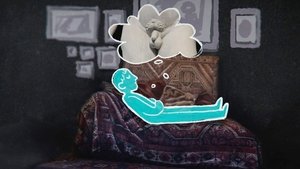
Humans spend up to six years dreaming over the course of their lifetime. What if dreams were more than unreal visions? Could we take the brilliant ideas that appear in dreams and make them a reality? Dreams hold a largely untapped creative potential.
-
С29 Where do people migrate to?
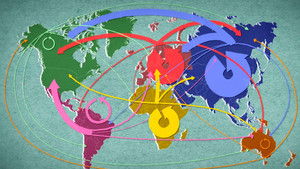
Researchers are searching for patterns and models to predict migration. Factors such as technological developments, demographic changes, economic crises, and climate change influence migration.
-
С30 What Do Animals Talk About?
The mystery of animal communication stands in contrast to human language: Elephants use infrasound, cats vocalize, and whales communicate through flipper movements. The question is, what would change if these sounds could be translated? Humans have the ability to understand each other using dictionaries or translation apps.
-
С31 Are we getting dumber?
The Flynn effect showed an increase in intelligence scores since the 20th century. However, since the turn of the millennium, some IQ scores have been declining, and researchers are searching for explanations. Theories include "dysgenics," in which families with academic backgrounds tend to have fewer children, as well as the influence of migrants from disadvantaged backgrounds.
-
С32 Do Computers Have Biases?
Let's not kid ourselves: everyone has biases. Whether it's filling a position, granting credit, or handing down a prison sentence, how can we be sure we're making rational decisions? Wouldn't it be wiser to rely on artificial intelligence, a technology already deployed in many cases with surprising results?
-
С33 How can everyone be fed?
Modern, highly efficient agriculture feeds many people, but it is reaching its ecological limits with declining soil fertility and biodiversity, as well as increasing environmental pollution from chemicals. The challenges of climate change are exacerbating these problems.
-
С34 Are We Doing More Drugs?
Drugs have a bad press. But scientists have long been convinced that the use of psychedelics can sometimes be beneficial. The use of ecstasy, LSD and other hallucinogens could soon be authorised for therapeutic purposes. Should we change our relationship to certain drugs?
-
С35 Are We Ready for Mars?
As soon as weightlessness sets in in Earth orbit, everything floats, including bodily fluids. Most astronauts suffer from space sickness – similar to seasickness. You get sick, your eyes go crazy, your face swells up, your legs get longer and after a few sleepless nights (there is no day or night in space) many astronauts get severe back pain. Space researchers are trying to understand how the human body reacts without gravity. Could we need it to live?
-
С36 Can we glimpse the afterlife?
Brain researcher Gerhard Roth describes near-death experiences as frequent encounters with bright light and feelings of bliss. Scientists explain this through neurological processes and emphasize that those affected are often only clinically dead.
-
С37 Could we become immortal?
Humanity has dreamed of a Fountain of Youth since the dawn of time. A dream that may have become reality. Laboratories around the world announce they have rejuvenated animal species as diverse as mice, nematodes, and fruit flies. Anti-aging research has achieved the impossible: these animals live longer and healthier lives. Next step, human beings?
-
С38 Could We Live Without Agriculture?
Both a blessing and a curse, farming feeds us humans but is also harmful to the environment. Agriculture has radically transformed the land and our ways of life. But could foodstuffs created with biotechnology spell the end of traditional farming?
-
С39 How dangerous is space weather?
We like to talk about the weather because it affects us every day. But have you ever heard of space weather? Not just for astronauts, it also our affects lives on Earth. Scientists are particularly interested in solar activity as it can quickly disrupt our life on Earth.
-
С40 Will we travel to Mars?
According to Elon Musk, we could soon be living on Mars. Yet, this idea seems unrealistic: extreme cold, an atmosphere composed primarily of CO2, and dangerous cosmic rays... So why on earth would anyone want to settle there? Where does this enthusiasm for the Red Planet come from?
-
С41 Can We Create Money from Nothing?
Imagine a friend wants to borrow your car, you promise to provide one even though you only have a windscreen wiper. Absurd isn’t it? But this is exactly what banks do when they lend you money…
-
С42 How do we end wars?
With over 13,000 nuclear weapons in the world, there is a risk of massive destruction. The program "42 – The Answer to Almost Everything" examines this topic scientifically.
-
С43 Is Space Being Stolen From Us?
Getting into space has never been easier and the resources of our solar system are highly coveted. But with the legal framework of space exploration and the exploitation of its resources still unclear, is space being stolen from us?
-
С44 What Power Do Thoughts Have?
It has been known since antiquity that thoughts have an influence on health. Research, such as imaging techniques that demonstrate the placebo effect, makes the power of thought visible. Psychologist Ellen Langer shows in experiments how thoughts can influence the body. However, controlling thoughts is difficult because most of them are unconscious.
-
С45 Can We Trust Ourselves?
We cannot escape our fate and we cannot escape ourselves. But we also have our limits: confused thinking, misleading intuitions, unrealiable memories... What consequences do these potential errors have on our relationship to the world and to ourselves? Just how far can we trust ourselves?
-
С46 Are we more intelligent in swarms?
Swarms are fascinating phenomena without clear leadership. In beehives, anthills, in the sky, or in the sea, they operate successfully and aesthetically. Human crowds, on the other hand, can become chaotic in lynch mobs or traffic jams. Researchers are investigating the rules behind swarm intelligence in order to learn from them and perhaps apply them to robot swarms.
-
С47 The Search for a Universal Theory
Formulating the theory of everything, the one that would describe all the laws of the Universe from a single fundamental law, would be the pinnacle achievement of physics. We could finally understand everything and solve the mysteries that still escape us. Heisenberg, Einstein, Hawking… All the great scientists have tried. All have failed. So can we still hope to find the theory of everything one day?
-
С48 Can we turn crap into gold?
Humanity has been hoping for a sensational discovery. Ever since we succeeded in converting wind and sun into energy, we've been waiting for the next big thing. A treasure just waiting to be discovered. The idea that we might find this in our feces seems far-fetched at first. We overlook its true potential. Research on our bodies is essential for modern medicine. Through it, immunologists and nutritionists receive messages from the mysterious core of our bodies. Doctors like gastroenterologist Harry Sokol in Paris go even further and utilize the healing capabilities of our stool. But our feces offer us other access points to ourselves. Based on ancient fecal discoveries from the past, we can travel back in time to our evolutionary history.
-
С49 Are You Psychopathic?
Psychopaths like Ted Bundy are not isolated cases; approximately 1-2% of the population are considered psychopathic. Psychologist Abigail Marsh researches why some adolescents with conspicuous behavior become psychopaths while others do not. Despite the complex causes, the psychopathy checklist can help identify them.
-
С50 How does a wave become rogue?
Every seven days, a large ship goes missing. This is due, among other things, to monstrous waves that appear out of nowhere. Unlike tsunamis, there is currently no method for warning or predicting them. This is because science still knows surprisingly little about the phenomenon of "freak waves." Rogue waves were long considered sailors' tales until a 26-meter-high wave was recorded on the Draupner platform in the North Sea in 1995. This changed research and led to three theories about their formation: the current model, superposition, and nonlinear modulation instability.
- Показать больше серий 50 из 219













Если вам понравился 42 – Ответ практически на все вопросы











Оценки и комментарии
Войдите, чтобы оценить этот фильм и присоединиться к обсуждению.
Войдите,Комментариев пока нет. Поделитесь первым мнением.
Сообщить о проблеме
Расскажите, что не так, и мы проверим. Спасибо, что помогаете поддерживать точность Watchvoy.